Why Does AI Cite One Brand and Ignore Another? The New Battle for Digital Evidence!
BrandThink
Growth Field Notes
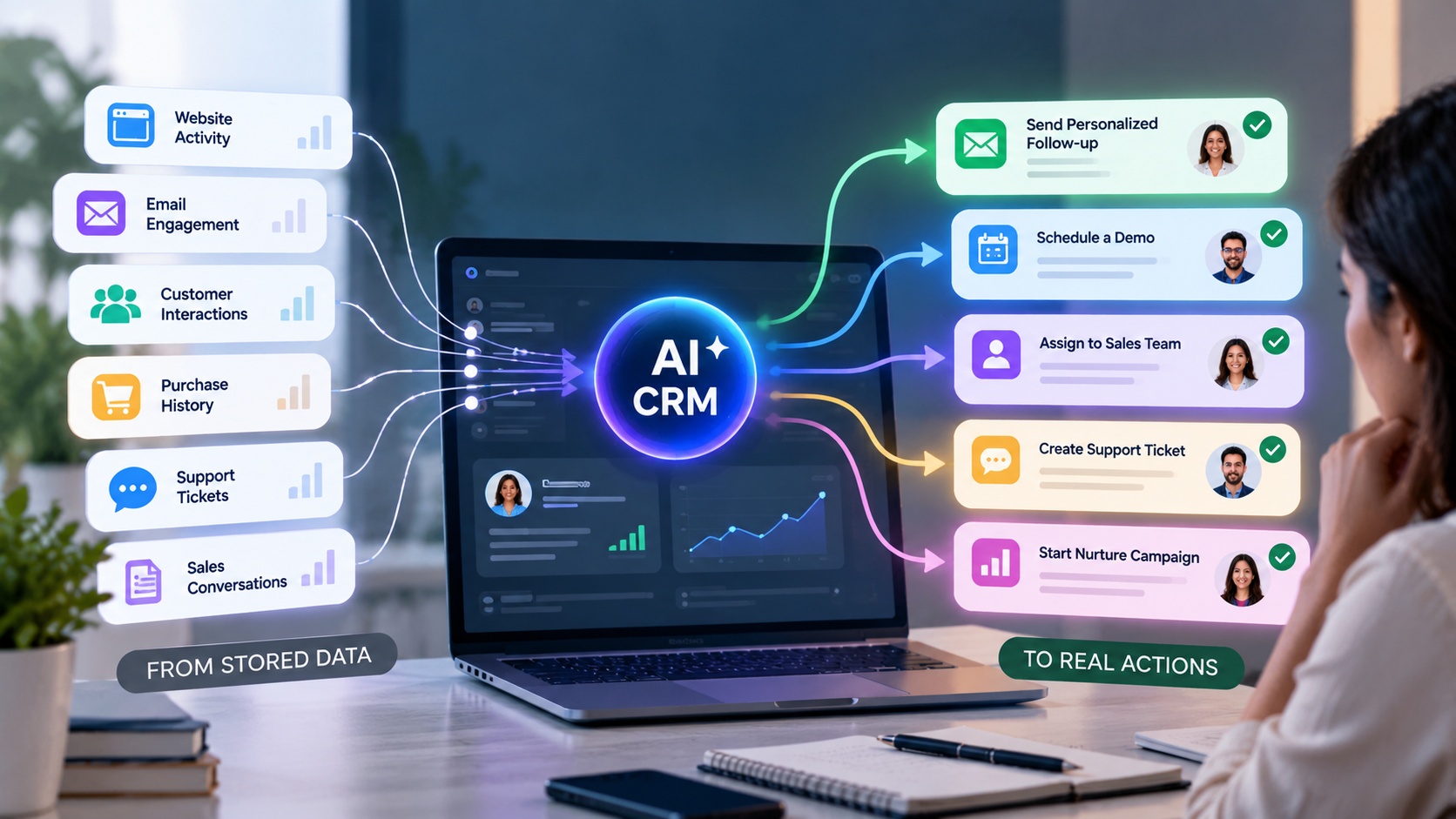
Have you ever searched for your brand on ChatGPT, Gemini, or Perplexity and wondered why a competitor keeps getting mentioned while your business gets ignored? This is where AI citations become important. When people ask AI platforms for recommendations, comparisons, or answers, the sources behind those answers can influence which brands they discover. Your website might rank well on Google, yet another brand could appear more often in AI-generated responses. Why does that happen? It often comes down to the quality of available evidence, how clearly your content answers questions, and whether AI systems can find and verify the information. Let's explore what makes one brand easier to cite than another and how you can improve your AI visibility.
What Are AI Citations and Why Do They Matter?
AI citations are references or links to sources that an AI platform uses or presents to support its response.
For example, someone might ask ChatGPT:
"Which digital marketing agency should I consider for ecommerce SEO?"
The response could mention three agencies and link to their websites, service pages, case studies, or other relevant sources.
Those links are important because they give users a way to check the information behind an AI-generated answer.
For brands, AI citations can help with:
- →Brand discovery
- →Referral traffic
- →Trust and credibility
- →Product and service consideration
- →Visibility in AI-generated recommendations
However, a brand mention and a citation are not the same thing.
A platform might mention your brand without linking to your website. It might also cite a third-party article that discusses your business.
This means AI visibility is not just about getting your brand name mentioned. It is also about making your information easy to find, understand, and verify.
7 Factors That Influence Which Brands AI Platforms Cite
1. Your Website Provides Clear and Relevant Answers
AI platforms need information that directly addresses the user's question.
Imagine someone asks:
"What is the best window film for reducing heat in Indian cars?"
One website offers a general page about window films.
Another explains how window films work, compares different types, discusses heat rejection, and answers common questions about vehicle applications.
Which page provides more useful evidence for that specific question?
The second page gives the reader more information to evaluate.
This does not mean longer content automatically gets cited. A short, accurate answer can be more useful than a lengthy article filled with unnecessary details.
The goal is to answer the question clearly.
For your website, this means:
- →Use descriptive headings.
- →Answer important questions directly.
- →Explain technical terms in simple language.
- →Include relevant examples.
- →Avoid vague claims that do not explain anything.
A page should help a reader understand the topic even if they have never heard of your brand.
2. Your Claims Are Supported by Verifiable Evidence
This is one of the most important parts of AI visibility.
Consider these two statements.
"Brand A offers the best SEO services in India."
"Brand A provides technical SEO audits, ecommerce SEO, and content strategy. Its published case study describes how it improved organic traffic for a Shopify store over six months."
The first statement is a broad claim.
The second provides specific information that readers can investigate.
AI systems may retrieve and cite different sources depending on the question, but verifiable information gives them a stronger basis for presenting factual claims.
Your website should include evidence wherever possible.
For example:
- →Original research
- →Case studies
- →Customer reviews
- →Product specifications
- →Expert explanations
- →Published reports
- →Clear service descriptions
If you claim that your product improves performance, explain how you measured that improvement.
If you claim that your agency helped a client grow, provide relevant data and describe the period being measured.
The more specific your evidence, the easier it becomes for readers to evaluate your claims.
3. Other Reliable Sources Confirm Your Brand Information
Your website is not the only place where AI systems can find information about your business.
They may also encounter your brand through industry publications, review platforms, business directories, news articles, and other websites.
Imagine your website says that your company specializes in ecommerce SEO.
A respected industry publication discusses your ecommerce SEO work. A customer review mentions your Shopify expertise. Your business profile describes the same services.
These sources provide a more consistent picture of your brand.
This is where corroboration matters.
Corroboration means that information can be supported by more than one relevant source.
However, not every mention carries the same value.
A detailed review from a real customer may provide more useful evidence than dozens of generic directory listings.
Similarly, an independent industry article may offer more credibility than a promotional post written by the brand itself.
Focus on earning relevant, genuine mentions rather than creating large numbers of low-quality listings.
4. Your Brand Information Is Consistent Across the Web
Imagine your website describes your business as an ecommerce SEO agency.
Your LinkedIn profile calls you a digital marketing consultant.
A directory lists your business as a web development company.
These descriptions may all be technically related, but they create an unclear picture.
What does your business actually specialize in?
AI systems can encounter these different descriptions when researching your brand.
Consistent information can make it easier for people and search systems to understand your business.
Review the following:
- →Brand name
- →Company description
- →Services
- →Location
- →Industry focus
- →Founder or team information
- →Website URL
This is particularly useful for businesses with multiple locations, parent companies, or several service categories.
Keep your descriptions accurate. Do not force the same wording into every platform if it does not fit the context.
The aim is to communicate a consistent identity, not to repeat identical sentences everywhere.
5. Your Content Is Easy to Crawl and Access
Even useful content cannot help much if a search system cannot access it.
Technical accessibility remains a basic requirement for AI search visibility.
For example, a page might contain valuable product information, but important details could be hidden behind scripts, login requirements, or inaccessible website elements.
A website might also block relevant crawlers through its robots.txt file or hosting configuration.
For ChatGPT search, OpenAI identifies OAI-SearchBot as the crawler used to discover websites for search features. Website owners can manage crawler access through their technical settings. <Cite refs={["turn652397search1","turn652397search6"]}/>
Google also states that its AI search features rely on existing Search requirements and SEO fundamentals. Pages need to be indexed and eligible to appear in Google Search before they can be shown as supporting links in AI Overviews or AI Mode. <Cite refs={["turn652397search0","turn652397search5"]}/>
Here are a few technical checks worth performing:
- →Confirm that important pages return a successful HTTP status.
- →Check whether relevant crawlers can access your website.
- →Review robots.txt directives.
- →Check canonical tags.
- →Ensure important content is available as readable text.
- →Maintain useful internal links.
- →Fix indexing issues.
A technically accessible website gives search systems a better opportunity to discover your content.
It does not guarantee a citation, but it removes avoidable barriers.
6. Your Content Offers Something Different From Competitors
Let's say five agencies publish articles about technical SEO audits.
All five articles explain:
- →What a technical SEO audit is
- →Why it matters
- →Which tools to use
- →How to fix common issues
If every article offers the same information, what makes one source more useful than another?
This is where original content matters.
Google's guidance for generative AI search emphasizes helpful, original information, firsthand experience, and content that offers value beyond what is already widely available. <Cite refs={["turn652397search5","turn652397search12"]}/>
Your content could stand out through:
- →A real audit example
- →Original data
- →A detailed implementation checklist
- →Expert commentary
- →A comparison based on actual testing
- →Lessons learned from a client project
For example, instead of publishing another generic article about ecommerce SEO, explain how a Shopify store handled duplicate product URLs, canonical tags, and collection-page indexing.
Specific examples give readers something they can apply.
They also make your content less interchangeable with every other article on the topic.
7. Your Website Builds Trust Through Expertise and Transparency
A brand can publish useful information and still leave readers with questions.
Who wrote this article?
Does the author have relevant experience?
Where did the data come from?
Can the reader verify the claims?
These questions are closely related to Google's people-first content guidance and its emphasis on experience, expertise, authoritativeness, and trustworthiness.
E-E-A-T is not a single ranking factor or a direct AI citation score. It is a framework used to assess the quality and trustworthiness of information. <Cite refs={["turn652397search12","turn652397search14"]}/>
For your website, practical ways to demonstrate credibility include:
- →Add clear author biographies.
- →Explain relevant professional experience.
- →Link to reliable sources.
- →Publish original case studies.
- →Include dates when information needs updating.
- →Keep company and contact information accurate.
- →Correct outdated or misleading claims.
You do not need to make your content sound overly technical.
In fact, clear explanations often make expertise easier to recognize.
The goal is to help people understand why they should trust the information.
How to Improve AI Brand Citations Through GEO
Generative Engine Optimization (GEO) focuses on improving how a brand and its content appear in AI-generated search experiences.
It builds on SEO rather than replacing it.
Google's published guidance says that existing SEO fundamentals remain relevant to its AI search features. It also advises website owners to focus on useful, reliable, people-first content instead of chasing special AI optimization tricks. <Cite refs={["turn652397search0","turn652397search5"]}/>
Here is a practical approach.
Step 1. Identify the Questions Your Customers Ask AI
Think about the questions people ask before choosing your product or service.
For an ecommerce SEO agency, these could include:
- →Which agency is best for Shopify SEO?
- →How much does ecommerce SEO cost?
- →What should I look for in an SEO agency?
- →Which SEO tools are useful for Shopify stores?
Create content that answers these questions with useful information and evidence.
Step 2. Check Your Current AI Visibility
Test relevant questions across ChatGPT, Gemini, and Perplexity.
Record:
- →Whether your brand appears
- →Whether competitors appear
- →Which websites are cited
- →Which claims are made about your brand
- →Whether the cited sources support those claims
Repeat the process over time.
AI responses can vary by query, platform, and available information. A single test does not establish a permanent ranking position.
Step 3. Improve the Pages That Matter Most
Review your main service pages, product pages, case studies, and educational content.
Ask yourself:
- →Does this page answer a specific question?
- →Are the claims supported?
- →Is the information current?
- →Can visitors understand what we offer?
- →Is the page accessible to search crawlers?
Improve the pages that are important to your business and your customers.
Step 4. Build Relevant Third-Party Evidence
Look for genuine opportunities to earn mentions from relevant websites.
These could include:
- →Industry publications
- →Expert interviews
- →Customer case studies
- →Relevant business associations
- →Product review websites
- →Industry-specific directories
Do not focus on collecting mentions without considering their relevance.
A few useful, trustworthy sources can provide more meaningful evidence than a large number of unrelated mentions.
Step 5. Track Citations and Business Outcomes
AI visibility should not be measured only by the number of brand mentions.
Track several indicators:
| Metric | What It Helps You Understand |
|---|---|
| AI Brand Mentions | How often your brand appears in AI responses |
| AI Citations | How often your website or other sources are linked |
| Citation Share | Your citation presence compared with selected competitors |
| AI Referral Traffic | Visits arriving from AI platforms |
| Assisted Conversions | Whether AI-referred visits contribute to conversions |
| Brand Accuracy | Whether AI platforms describe your business correctly |
These measurements help you understand whether your GEO work is improving visibility and supporting business goals.
What Makes a Brand Easier for AI Systems to Trust and Cite?
There is no single formula that guarantees AI citations.
Different platforms use different systems, and their responses can change.
Still, the practical direction is clear.
Brands need to make their information easy to discover, understand, and verify.
That means:
- →Publish useful, original content.
- →Support claims with evidence.
- →Keep brand information consistent.
- →Make important pages technically accessible.
- →Build genuine third-party credibility.
- →Demonstrate relevant expertise.
- →Review AI-generated brand descriptions regularly.
The brands that focus on these fundamentals give people and AI search systems more useful information to work with.
Frequently Asked Questions
1. Why does ChatGPT cite one brand and ignore another?
ChatGPT may cite sources based on their relevance to the question, availability, and usefulness as supporting evidence. A competitor may provide clearer information or more relevant evidence for a specific query. Citation placement is not guaranteed.
2. What are AI citations in SEO?
AI citations are links or references to sources presented in AI-generated answers. They help users verify information and explore the sources behind a response.
3. How can I improve my brand's AI visibility?
Improve your website's technical accessibility, publish useful and original content, support claims with evidence, maintain consistent brand information, and earn relevant third-party mentions.
4. Does traditional SEO help with AI citations?
Yes. Traditional SEO fundamentals remain relevant to AI search. Google states that its AI search features use existing Search systems and technical requirements.
5. Does schema markup guarantee AI citations?
No. Structured data can help search systems understand page information, but it does not guarantee that an AI platform will cite your website. Google states that no special schema markup is required for AI Overviews or AI Mode.
6. What is the difference between an AI brand mention and an AI citation?
A brand mention refers to your business by name. An AI citation provides a reference or link to a source. A platform can mention your brand without linking to your website.
7. How do I track AI citations?
Test relevant prompts across AI platforms, record which brands and sources appear, compare results over time, and review referral traffic where analytics data is available.
Final Thoughts
Why does AI cite one brand and ignore another?
Sometimes, the answer lies in content relevance. In other cases, it may involve technical accessibility, source quality, or the availability of supporting evidence.
A competitor might have a more useful explanation, a stronger case study, or more consistent information across trusted sources.
This is why GEO should not be treated as a shortcut to AI rankings.
The real work is building a brand that people can understand, verify, and trust.
AI citations are one possible outcome of that work. They are not a guaranteed result.
If your business wants to improve AI visibility, start by reviewing the information available about your brand and identifying where the evidence is missing.
Want to Know Why AI Platforms Are Citing Your Competitors?
A GEO audit can help you assess your website's AI visibility, identify content and technical gaps, review third-party brand evidence, and understand how AI platforms describe your business.
Instead of guessing why competitors appear in AI-generated answers, you can build a clearer picture of what needs improvement.
Let's review your brand's digital evidence and identify practical opportunities to improve AI visibility.
Related Insights

Are AI Ad Platforms Making Marketers Better at Performance - or Just Better at Spending?
Are AI ad platforms making marketers better or just spending faster? Explore AI performance marketing, automated bidding, AI optimisation, and smarter paid media.
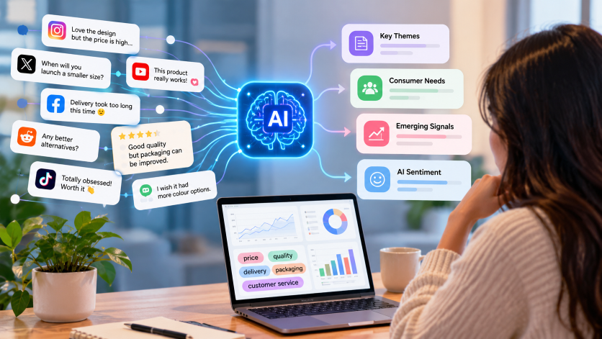
Social Listening Is Becoming AI Consumer Intelligence - Here’s What Changes!
Discover how AI social listening turns millions of conversations into consumer intelligence, themes, needs and early signals for smarter marketing and product decisions.
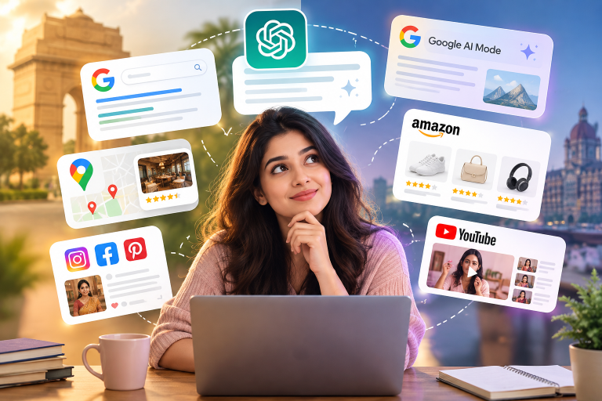
SEO Is No Longer the Whole Search Journey: Where Do Indians Ask AI Instead?
AI search in India is now becoming part of how people discover information, compare choices and decide what to do next across search engines, AI assistants, maps and marketplaces.
Ready To Make Your Stack Work Together?
Bring us the complexity. We'll help turn disconnected platforms, data and workflows into a MarTech system built around your business.