The 24-Hour Trend Window: Can Brands Spot a Cultural Moment Before It Peaks?
BrandThink
Growth Field Notes
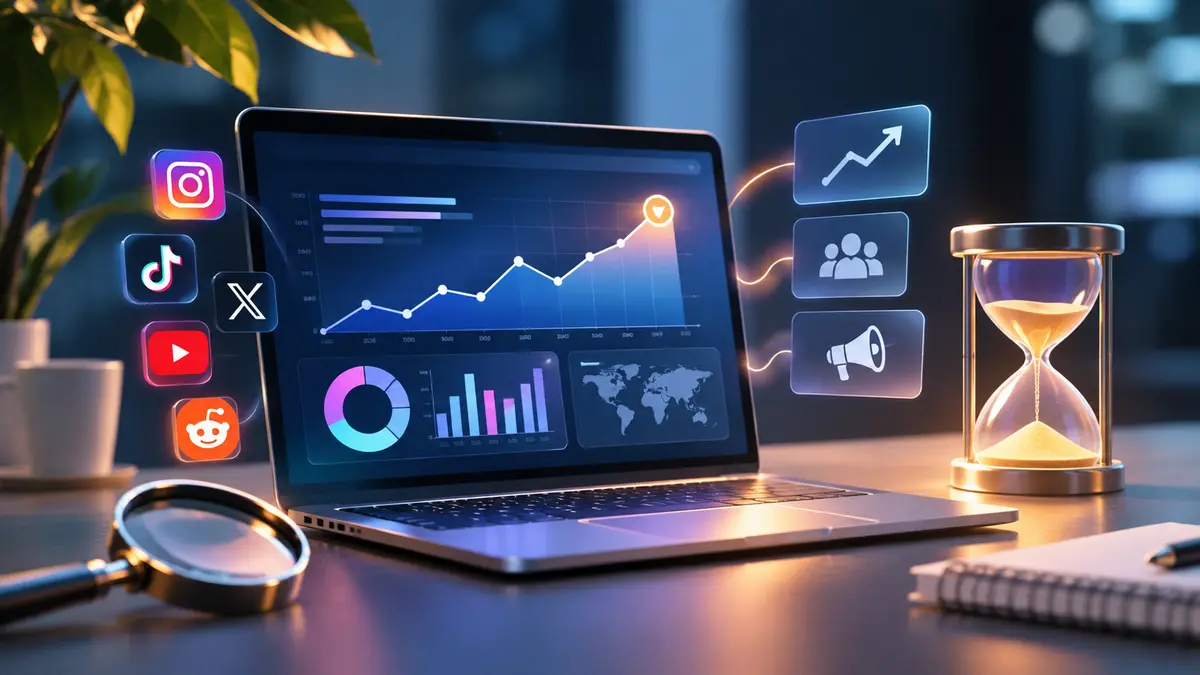
A cultural trend rarely becomes popular overnight. Before a topic reaches millions of people, it usually starts with a small conversation, a creator's post, a community discussion, or a change in how people express themselves online. This is where social trend detection gives brands an advantage. It helps marketing teams identify early signals, understand emerging conversations, and recognise cultural moments before they become mainstream.
Think about the last viral conversation you saw on Instagram or TikTok. By the time multiple brands started creating content around it, the original conversation had probably been going on for hours or even days.
And that's the problem.
Most brands are good at following trends. Far fewer are good at recognising where the next trend might come from.
The real opportunity lies in understanding what people are starting to discuss, why they care about it, and whether that conversation has the potential to grow.
So, can brands identify a cultural moment before it peaks? Yes, they can improve their chances by combining real-time listening, social signals, AI-powered analysis, and human understanding.
Let's look at how.
What Is Social Trend Detection and Why Does It Matter?
Social trend detection is the process of monitoring online conversations, audience behaviour, search activity, and engagement patterns to identify topics that are gaining attention.
It helps brands understand what people are discussing before those conversations become widely recognised.
For example, imagine people in a particular online community suddenly start discussing minimalist skincare routines. Initially, the conversation might involve only a few creators and consumers.
Over the next few hours, more people begin sharing their routines, asking product-related questions, and discussing similar experiences.
A skincare brand monitoring these conversations could recognise the growing interest and prepare relevant educational content.
That's the difference between reacting to a trend and recognising its early signs.
For brands, this matters because early cultural insights can influence:
- →Content planning and social media campaigns.
- →Product positioning and communication.
- →Influencer and creator partnerships.
- →Consumer research and audience understanding.
- →Brand participation in relevant cultural conversations.
1. Look Beyond Viral Hashtags and Monitor Early Social Signals
One of the biggest mistakes brands make is relying only on trending hashtags.
A conversation doesn't need a million views to become culturally relevant. Sometimes, the most useful signals appear in smaller communities.
Brands should monitor:
- →Repeated questions in Reddit discussions.
- →Sudden increases in comments around a particular topic.
- →New expressions and phrases used by creators.
- →Similar conversations appearing across different platforms.
- →Changes in the way consumers describe their problems.
For example, suppose people begin discussing affordable alternatives to expensive beauty products.
At first, the discussion might appear in a few Reddit threads. Then, beauty creators start making comparison videos. Soon, consumers begin searching for affordable alternatives.
The topic is no longer just a few isolated conversations.
The important thing is to identify the connection between these signals instead of treating every popular post as a potential trend.
2. Use the First 24 Hours to Understand a Developing Conversation
The first 24 hours can offer useful information about how a conversation is developing.
This doesn't mean every trend follows a fixed 24-hour lifecycle. Some trends take weeks to grow, while others disappear within hours.
Instead, brands can use the first 24 hours as a practical monitoring and decision-making window.
Here's how:
Hours 0–4: Identify unusual activity
Monitor sudden increases in mentions, searches, comments, and discussions.
Hours 4–8: Understand the conversation
Look at what people are saying. Identify common questions, recurring opinions, and the creators driving attention.
Hours 8–12: Check cultural relevance
Does the topic connect with your audience? Is it related to your industry? Are people showing genuine interest?
Hours 12–18: Develop a response
Decide whether to create an educational post, a short video, a campaign idea, or a brand response.
Hours 18–24: Publish and observe
If the conversation is relevant, publish your content and monitor how people respond.
This process gives teams a starting point without forcing them to jump on every viral moment.
3. Combine Social Listening With Search Behaviour
Social media tells brands what people are discussing. Search behaviour can help reveal what they want to understand next.
These two sources can offer useful cultural insights when analysed together.
For example:
- →Instagram comments show increasing interest in a particular fashion style.
- →TikTok creators begin sharing outfit inspiration around the same style.
- →Google Trends shows growing search interest.
- →Reddit users start asking where to find similar products.
When these signals appear together, brands have a stronger reason to investigate the topic.
This is where real-time listening becomes more useful than simply tracking social media mentions.
Brands can use tools such as Google Trends, Brandwatch, Talkwalker, and Meltwater to monitor different aspects of online activity.
However, the tools should support research rather than replace it.
A rise in searches doesn't automatically mean a trend will become commercially relevant. Teams still need to understand the audience, context, and reason behind the interest.
4. Use AI to Identify Patterns That People Might Miss
AI can help marketing teams process large amounts of online conversation data.
Instead of manually checking hundreds of posts, teams can use AI-powered listening tools to identify:
- →Frequently discussed topics.
- →Changes in audience sentiment.
- →Similar conversations across platforms.
- →Emerging keywords and phrases.
- →Sudden increases in topic mentions.
- →Connections between different consumer discussions.
For example, an AI listening platform might identify an increase in conversations around sustainable fashion.
On its own, this information doesn't explain what is happening.
But further analysis might show that consumers are increasingly discussing clothing longevity, second-hand shopping, and responsible purchasing.
These connected discussions provide a clearer picture of the cultural shift.
This is where trend intelligence becomes useful. It helps brands move from collecting individual mentions to understanding the patterns behind them.
AI can identify the pattern. People still need to interpret its cultural meaning.
5. Build a Predictive Trend Intelligence Framework
Most brands use social listening to understand current conversations. The next step is using those conversations to identify possible future developments.
Predictive trend intelligence combines historical data, current social signals, and audience behaviour to estimate which topics may gain attention.
A practical framework can include four stages.
Stage 1: Signal collection
Collect conversations from social platforms, online communities, search trends, news sources, and customer feedback.
Stage 2: Pattern identification
Look for repeated topics, similar opinions, increasing questions, and conversations moving between communities.
Stage 3: Momentum assessment
Check whether the topic is attracting new audiences, generating meaningful engagement, and receiving attention from different creators.
Stage 4: Future relevance
Assess whether the topic could influence consumer preferences, purchasing decisions, or industry conversations.
For example, a fashion brand might notice growing discussions around rewearing existing outfits instead of buying new clothes for every occasion.
If the conversation continues across creators, search platforms, and consumer communities, it may indicate a broader shift in fashion preferences.
The brand can then explore content around outfit repetition, styling ideas, and wardrobe planning.
The objective isn't to predict the future perfectly. It's to make decisions using stronger early signals.
6. How Brands Can Separate a Temporary Viral Moment From a Real Cultural Shift
Not every popular conversation deserves a marketing campaign.
A meme might receive millions of views but disappear within a day. Meanwhile, a smaller conversation about affordability or changing shopping habits could have a longer impact.
So, how can brands tell the difference?
They should examine five factors:
| Signal | What brands should look for |
|---|---|
| Conversation growth | Is the topic attracting more discussions? |
| Audience participation | Are people sharing their own experiences? |
| Cross-platform activity | Is the topic appearing on multiple platforms? |
| Search interest | Are people actively looking for more information? |
| Industry relevance | Does the conversation connect with consumer needs? |
A temporary viral moment usually attracts short-term attention.
A deeper cultural shift often involves repeated discussions, changing opinions, and new consumer behaviour.
Brands should look for these differences before investing time and resources in a campaign.
7. What Does the Future of Social Trend Detection Look Like?
The future of social trend detection is likely to involve more predictive analysis and less dependence on retrospective reporting.
Instead of asking what went viral yesterday, marketing teams will increasingly need to ask what early signals suggest about tomorrow.
Three developments will shape this approach.
AI-powered narrative analysis
AI tools can help identify emerging narratives by connecting conversations that use different words but discuss similar ideas.
Cross-platform intelligence
Brands will need to study conversations across social media, search engines, online communities, creator platforms, and customer feedback channels.
Human-led cultural interpretation
Technology can highlight unusual activity, but people need to understand the context. Cultural sensitivity, audience knowledge, and brand relevance still matter.
This shift could help marketing teams move from reactive social listening towards predictive signals.
The brands that benefit most won't necessarily be the ones publishing first. They'll be the ones that understand why a conversation matters.
Frequently Asked Questions About Cultural Trend Detection
1. How can brands identify a cultural trend before it goes viral?
Brands can monitor early conversations across social media, Reddit, creator communities, search trends, and online forums. They should look for repeated discussions, increasing engagement, changing audience sentiment, and similar topics appearing across platforms.
2. What is the difference between social listening and trend intelligence?
Social listening monitors online conversations and audience opinions. Trend intelligence analyses these conversations to identify patterns, emerging narratives, and possible changes in consumer behaviour.
3. Can AI predict the next viral trend?
AI can identify early patterns, unusual increases in mentions, and changes in audience interest. It can help estimate which topics may gain attention, but it cannot guarantee that a particular conversation will become viral.
4. What is the 24-hour trend window?
The 24-hour trend window is a practical approach to monitoring and evaluating a developing conversation during its early stages. It gives brands a framework to identify signals, understand audience reactions, and decide whether to participate.
5. Which tools help brands monitor emerging cultural trends?
Some commonly used tools include Brandwatch, Talkwalker, Meltwater, Google Trends, and Exploding Topics. Each supports different aspects of social listening, search analysis, and emerging topic research.
6. Why are social signals important for predictive marketing?
Social signals provide early clues about changing interests, consumer concerns, and emerging discussions. When combined with historical data and audience research, they can help brands make better marketing decisions.
7. How can small businesses benefit from trend intelligence?
Small businesses can follow niche communities, monitor customer questions, observe relevant creators, and track search interest. They can focus on a few conversations that genuinely connect with their audience instead of trying to follow every viral trend.
The Next Cultural Moment May Already Be Happening
By the time a trend reaches every social media feed, the opportunity to be an early participant may have passed.
But brands don't need to chase every conversation or publish content within minutes of a viral post.
They need to listen, understand, and recognise what is changing.
Combining social signals, real-time listening, AI analysis, and cultural insights gives marketing teams a better way to identify emerging narratives.
The real advantage isn't simply being the first brand to join a conversation.
It's knowing which conversation deserves your attention before everyone else starts talking about it.
Want to identify emerging cultural conversations before they become mainstream?
Connect with our team for a trend intelligence consultation. Let's explore how social signals, audience behaviour, and emerging narratives can help shape your next marketing strategy.
Related Insights
Are AI Ad Platforms Making Marketers Better at Performance - or Just Better at Spending?
Are AI ad platforms making marketers better or just spending faster? Explore AI performance marketing, automated bidding, AI optimisation, and smarter paid media.
Social Listening Is Becoming AI Consumer Intelligence - Here’s What Changes!
Discover how AI social listening turns millions of conversations into consumer intelligence, themes, needs and early signals for smarter marketing and product decisions.
SEO Is No Longer the Whole Search Journey: Where Do Indians Ask AI Instead?
AI search in India is now becoming part of how people discover information, compare choices and decide what to do next across search engines, AI assistants, maps and marketplaces.
Ready To Make Your Stack Work Together?
Bring us the complexity. We'll help turn disconnected platforms, data and workflows into a MarTech system built around your business.